
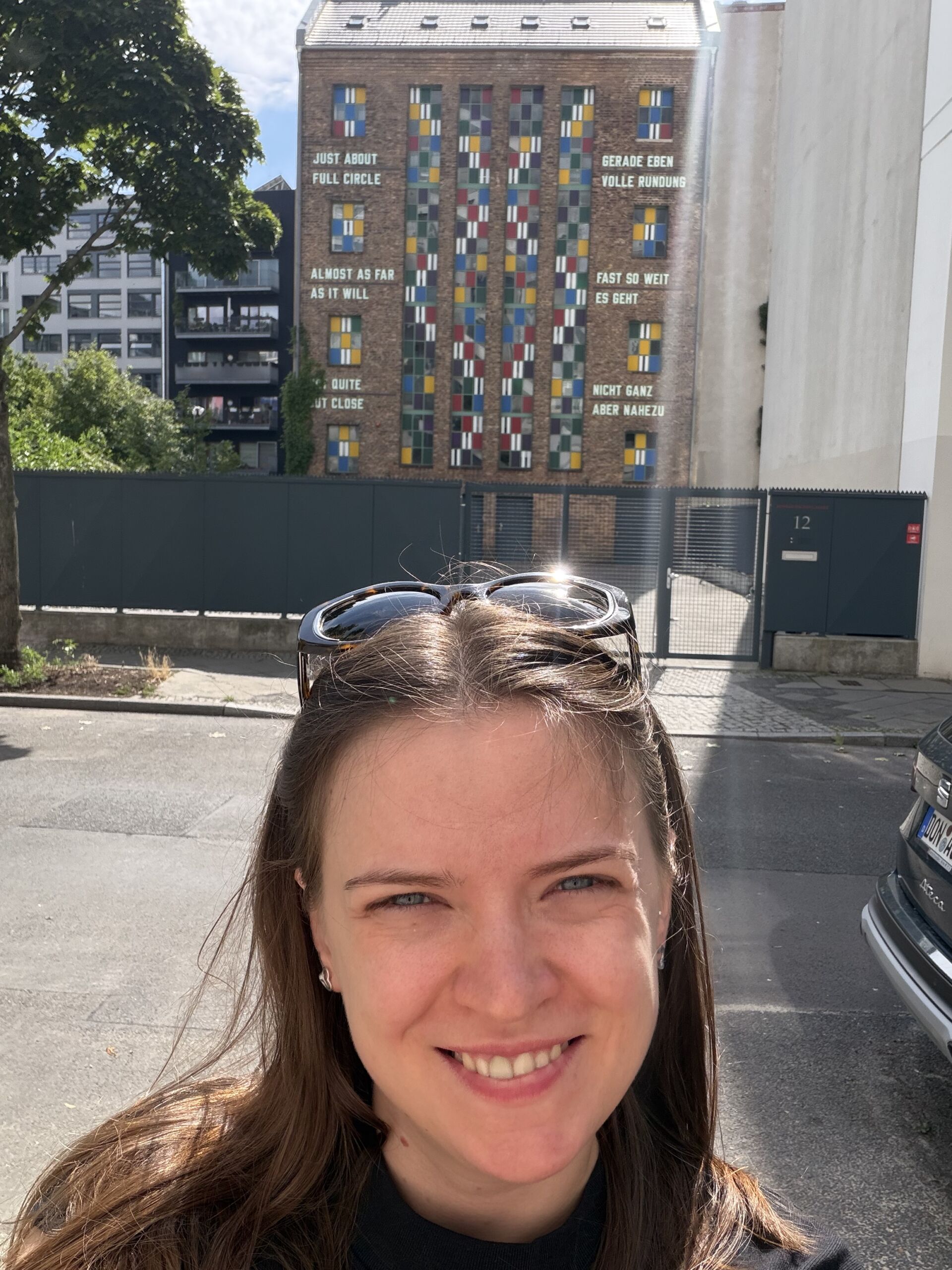
Each of us has a distinguishable writing style, just as talking style. How many memes have you seen about that one friend who sends a dozen messages each containing two words, or that one friend who sends one long message, or that one friend who dictates numbers in voice messages. We kinda feel these nuances on fingertips. Luckily, James W. Pennebaker was curious enough to translate these feelings, well, into numbers, and then to try and interpret these numbers using his expertise in psychology.
In this article, I share my feedback on this book, the thoughts that I had while reading it, as well as the analysis of my own writing that I did using Clude.ai.
And before I start I want to mention three important moments:
- I will skip most of the examples for the sake of time. They constitute a very big part of the book, if you like my review, go ahead and read it yourself
- And this one is for my fellow translators: In the book the author mentions that his findings actually are relevant for various languages, not only English
- The image for this article feature a great example of function words use. It is the facade of the König Gallery in Berlin not so far away from where I live
Expressive writing
James W. Pennebaker starts his book with describing the studies of how emotional writing can help deal with various traumatic experiences. He conducted such an experiment for the first time over 40 years ago. Today, such practices are well-known and I talked to a couple of people who used them and were really satisfied with the results. In November 2025 I myself decided to start journaling regularly. At first I used this technique as a braindump, to get rid of all intrusive thoughts that kept me awake. For now, I will just shortly say: this helped me so much that I still do this regularly. I strongly recommend it. I already started my third journal.
Anyway, I think the reason the author chose to start with this topic is because such texts mirror truthful streams of consciousness: real words people deliberately choose in the situations when nobody will judge them for a particular choice of a particular word. So, J. W. Pennebaker became curious as to how exactly such emotional writing helps. He came up with an idea that the very words, as well as the way people used these words in their essays may reveal some answers.
Enter computer revolution. The author describes two early computer programs that were developed to analyze and count words in texts somewhere in the 1980s-1900s: Linguistic Inquiry and Word Count, or LIWC (pronounced “Luke”) and Latent Semantic Analysis (LSA). Pure statistics, anonymisation of content, all of that stuff that was extremely time-consuming in the past. While working on LSA the creators came up with an idea that instead of analyzing content of what people were writing, they should analyze their language style. As it appeared, writing style was generally revealed through function words: pronouns, prepositions, articles, in short—small but common words. Apparently, the phrase “it’s not WHAT you said, it’s HOW you said it” has a lot of scientific background.
Principles of the word analysis
In chapter 2 the author starts explaining the principles of the word analysis that he uses in this book. J. W. Pennebaker divided the words in two main groups:
- Content words. These are words that have a culturally shared meaning in labeling an object or an action. For the purposes of this book, content words include:
- Nouns, e.g., table, uncle, justice, Fido
- Regular and action verbs, e.g., to love, to walk, to hide
- Most modifiers, e.g., adjectives (blue, fast, mouthwatering), and adverbs (sadly, hungrily)
- Style (or function) words are words that connect, shape, and organize content words. Interestingly for me, junk words count here, too. Most function words include:
- Pronouns, e.g., I, she, it
- Articles, e.g., a, an, the
- Prepositions, e.g., up, with, in, for
- Auxiliary verbs, e.g., is, don’t, have
- Negations, e.g., no, not, never
- Conjunctions, e.g., but, and, because
- Quantifiers, e.g., few, some, most
- Common adverbs, e.g., very, really
Now, I found this division curious. Sort of like yin and yang. Yes, you probably do not need that many function words to convey the content you want to convey. Yet, how much more lively and interesting a given speech becomes with a correct usage of function words! Ah, those memories of uni lectures: on some you fall asleep, and on others the time flies by unnoticeable… Maybe the whole deal really was in these stealth words? In the end of this article I will include the word analysis of it and we will see.
It made absolute sense for me when J. W. Pennebaker mentioned that we automatically focus on content words, at the end of the day, that’s why they are called so, right? However, what was surprising for both me and the author was the fact that it is very hard to master function words after about age twelve. If, like me, you work with languages, say, English, long enough you will easily understand whether a text was written by a native-speaker or not. It appears that the “people just don’t speak like that” feeling has a very tangible explanation: most of the errors in such texts will likely be in function words, not in content words. Because you can learn a dictionary by heart, but function words require social skills to use properly. And the only way to acquire such skills is to be in a given society and practice, and practice, and practice.
Gender differences
Enough talk—let’s get down to business. And, of course, the first and easiest categorization is… the gender one! I gathered the examples from all over the book in one table:
| Men use more | Women use more | No differences |
| Big words | Personal pronouns | First-person plurals |
| Nouns | Verbs(including auxiliary verbs) | Positive emotion words |
| Prepositions | Negative emotion (especially anxiety) | |
| Numbers | Negations (no, not, never) | |
| Words per sentence | Certainty words (always, absolutely) | |
| Swear words | Hedge phrases (“I think”, “I believe”) | |
| Articles | Cognitive words | |
| Social words |
Well-well-well, what do we have here? Can’t say I am surprised about the men’s column, yet I am really surprised by the other two columns. Why was I sure that ladies would be using less cognitive words? At the same time, looking at a broad picture of what words women use more, it makes total sense now. And I was glad to see that probably men aren’t shy to express positive emotions, like I thought they were. For me personally it always sounded strange to state something with a simple “yes” or “no”, unless the question was “Does 2 plus 2 equal 4?”. I always felt much more secure to say “I think yes/no”, because that’s what I think and I accept the fact that it may be different in reality.
It is important to mention that the author has gathered this statistics on thousands of texts that became available for him and his team offline and online. This statistics is a result of mere computational power. Though per se this is a very interesting method and it is always very hard to argue with maths, it should not be viewed as the ultimate trustworthy source for distinguishing language gender differences.
Speaking of maths. J. W. Pennebaker and his team actually decided to double check how good their computer would be at detecting the gender of the author. Here’s what they did: they saved well over 100,000 blog posts from 19,320 blog authors who identified themselves by their sex, and trained the program to sort the texts by function-word use into males and females. Where 50% was the chance, the computer identified the gender of the author correctly 72% of the time. Having also added content-word analysis, they increased their accuracy to 76%. Human guesses vary somewhere between 55% and 65%. Well played, well played.
Patterns of word use as unique fingerprints
Another interesting study J. W. Pennebaker did with his team using factor analysis of more than 8000 essays written by his students that were allowed to use for experimental purposes. All of the essays were written as a stream of consciousness as a part of regular exercises. Together with his team, J. W. Pennebaker separated various classes of function words and used factor analysis to study what clumps of function words emerged most. This helped them to differentiate three very different writing styles: formal, analytic, and narrative. Based on other studies the author came to the conclusion that the same dimensions are applicable to almost any genre of writing, including various genres of literature, songs, other essays, etc.
| Formal thinking | Analytic thinking | Narrative thinking |
| Stiff, sometimes humorless, with a touch of arrogance | People who work to understand the world | Natural storytellers |
| Big words, high rates of articles, nouns, numbers, prepositions | Make distinctions | Typical words: personal pronouns of all types (especially third-person), past-tense verbs, conjunctions (especially inclusive words such as with, and, together) |
| Few I-words, verbs (especially present-tense verbs), discrepancy words (e.g. would, should, could), common adverbs (really, very, so) | Typical words: exclusives (but, without, except), negations (no, not, never), casual words (because, reason, effect), insight words (realize, know, meaning), tentative words (maybe, perhaps), certainty (absolutely, always), and quantifiers (some, many, greater) | Even though the assignment was to write about their thoughts and feelings as they occur, at least 20 percent of the writers can’t help but tell a story of some kind |
| Tend to be more concerned with status and power, drink and smoke less, more mentally healthy | The analytic thinking factor reflects cognitive complexity | Better social skills, more friends, rate themselves as more outgoing |
| Tend to be less honest with themselves and others | People who make distinctions in speaking and writing make higher grades in college, tend to be more honest, and are more open to new experiences | |
| Read more and have more complex views of themselves than those who are low in analytic thinking |
Having studied thinking styles and compared their findings with other studies, J. W. Pennebaker and his team came to the conclusion that people tend to keep the same thinking style throughout their lives, because this is part of their personality. This, of course, does not exclude the fact that we all can fluctuate in our thinking styles depending on the situation or our vis-à-vis.
Emotion detection
I found this chapter particularly interesting and even after rereading it I underlined way too much information. Luckily, I am a linguist and not a psychologist, so if you would want to know what NYC mayor Rudolph Giuliani and Shakespeare’s King Lear had in common or how Giuliani’s word use changed after the 11th of September, as well as how personal blogs helped analyze how humans deal with trauma on a national level, go and read the book. A small spoiler to keep you interested, it involves simple language, smaller words, shorter sentences, fewer cognitive words. Interestingly, very similar conclusions I also read in the book Im Grunde Gut by Rutger Bregman, where the author explains that however surprising it may sound, an average person becomes much more compassionate and ready to help people around them in times of great distress, like it was after the attack on the World Trade Center on 9th September 2001. As a refugee, I can confirm this phenomenon. I was very excited when I realized that accidentally I read very similar scientifically proven facts about collective grief. And while googling this notion I remembered another case when I felt it. I went to Burning Man a few times in my life. It lasts for 7 days, Monday to Sunday, and the Man burns every Saturday. It’s the main and most spectacular night of all. Yet, not everyone knows that apart from the sculpture of the Man itself, the organizers build every year a so-called Temple. It is traditionally built not so far away from the Man and is burnt on Sunday in complete silence. The Temple is a quiet place where participants bring memorabilia of their emotional burdens. During the few hours while the Temple burns, people say goodbye and let go of past pain and tragedies. It is impossible not to cry. It is a silent yet extremely powerful moment of unspoken unity and grief. For me it was a moment of pure catharsis. Having let go of everything that was stuck in my head I made arguably the most important decision in my life: to be happy no matter what.
Lie detection
A considerable amount of our lives today is connected to lies: social networks, AI, politics, wars, you name it. I feel like with age I developed a pretty good sense of lies, yet this is just a sense. On the other hand, I can’t imagine myself sitting and analyzing texts from my messengers or client emails like some sort of lie detector. J. W. Pennebaker covered quite a few topics in this chapter: deceiving in everyday statements on the internet, in letters of recommendation, to avoid prison, heartbreak, war, lying on the witness stand, self-deception, and, of course, for love. Well, surprise, surprise, the devil really is in the details. I liked how the author explained why telling a false story is harder than one might think: one has to speak about something one hasn’t experienced, that being sad, to describe something that one does not “own.” Honest people use bigger words, longer and more complex sentences, express less emotions, and rely on more I-words. In other words, more details. Liars, in their turn, while inventing a story, use more cognitive words. Such nuances are hard to catch on the go, however a computer analysis revealed a large number of striking differences. Liars rarely speak from their own point of view, shifting attention to other people. Nevertheless, a lie detector per se still remains as something highly theoretical, since even the best once can detect lies at highest with 65% accuracy. That is why lie detectors are still not used in courtrooms.
Language of power
It was not a secret for me that as social animals people stick to hierarchy of various levels of strictness all over the cultures. However, quite a revelation for me was that in person humans establish hierarchy within the first few seconds. Ok, now that I think of it, it makes perfect sense. Apparently I never really paid attention to this part of life. Usually we consider a number of aspects: clothes, speech, age, expertise and so on. The author and his team came up with an interesting online experiment. To put it briefly: in a perfectly anonymous online chat people establish hierarchy just as fast, as they do it in person—within seconds. How did they find it out? Function words to the rescue! Here is how it looks like:
| High-status people | Low-status people |
| Low use of I-words | High use of I-words |
| High use of we-words | Low use of we-words |
| High use of you-words | Low use of you-words |
Experiments proved that pronouns I, we, and you are by far the words that consistently reveal status. The author further mentions that pronouns are the most social of all word categories and that we use them at particularly high rates during conversations.
One very important thing worth mentioning here: even though during conversation status is being determined, let’s say, automatically, it doesn’t at all mean that speakers are rude, or want to show off. Most of the participants of the experiments reported having very pleasant conversations and stayed in contact thereafter.
I never counted, but it seems to me that I use we-words really very often. At least in my inner monologue. Such a small two-letter word, yet it has several very powerful disguised meanings. Let us have a closer look at the 5 meanings that J. W. Pennebaker explains with regard to social status:
- The you-and-I we. As simple as that. You and I are reading this article;
- The my-friends-and-not-you we. You are back to the office from a vacation with friends and retelling the story: So, we went to a bar…;
- The we-as-you we. Remember how your mother told you: We don’t do that!;
- The we-as-I we. Or the royal we. I only read about it in history books;
- The every-like-minded-person-on-earth we. Defined by the author as “the politician’s favourite”, as in “We need a better government”.
Language of love
This is a great chapter, but it focuses more on psychology than linguistics. So I will just share the fact that I liked most: there is such a thing called style matching. It happens when people who pay attention to each other start talking in the same style. It becomes obvious thanks to their parallel use of function words: pronouns, prepositions, articles and other function words are used at almost identical rates.
Language of groups
Here, I also can’t say anything new to my fellow linguists: creole, argot, jargon, slang. Nothing much to add here.
Author identification
Literally last but not least: in this chapter J. W. Pennebaker shares exciting examples from his career of conducting word analyses for lawyers in courts, historians, music lovers, political consultants, educators, intelligence agents, and others. For the purpose of my article I will only mention his linguistic findings:
- Particularly good clues in identifying authors: function words and punctuation;
- Punctuation marks can identify some people better than anything they write. In fact, when looking only at punctuation, computer programs identified 31 percent of authors correctly—essentially the same rate as relying on function word;
- When both function words and punctuation were used together, the computer correctly paired the original bloggers with writing samples several years later 39 percent of the time;
- Obscure words are also a great marker for author identification. Some of us have our favorite words that we use all the time and never pay attention to them;
- N-grams: apart from analysing single words the author offers analysing word combinations, bigrams as pairs of words, trigrams as three words in a row, etc.
The end
J. W. Pennebaker finishes his book with a great thought that I would like to quote: …function words are the clues about a human psyche. Most promising, however, is that by looking at our own function words, we can begin to understand ourselves better.
My word analysis with Claude.ai
Probably the most interesting example in my article and a great way to sum up the book. Here’s my prompt word-for-word: “Finally I have an exciting project to work with you on! I read a book by James W. Pennebaker “The Secret Life of Pronouns”. I decided to write a review of this book and to post it on my website as a blog article. This review contains information from the book, my thoughts on it, and my experiences in life. And now I want to analyze the word content of my article, to perform with your help statistical analysis, and to analyze it as well, and to add my findings to my article as a practical example.”
I will just copypaste his answer:
“One methodological note first: I ran the analysis on your own prose only — I excluded the three summary tables (gender differences, formal/analytic/narrative, high/low-status pronouns) and the title/closing line, since those reproduce the book’s own category labels rather than your writing. That left 2,800 words of your actual voice to analyze.
The numbers
Overall shape
- 208 sentences, ~13.5 words/sentence — short, conversational
- Average word length: 4.6 letters — plain, not big-worded
- Type-token ratio: 0.33 (925 unique words out of 2,800) — normal range for essay-length text
Function vs. content words (Pennebaker’s core division)
- Function words: ~42.5%
- Content words: ~57.5%
The pronoun breakdown — this is the interesting part
| Pronoun category | Number |
| I-words | 86 |
| We-words | 31 |
| You-words | 22 |
I-words outnumber we-words nearly 3 to 1 (86 vs. 31). That’s the good kind of surprise for your article, because in the piece you wrote: “I never counted, but it seems to me that I use we-words really very often.” The data says the opposite — you’re actually a heavy I-user, which by Pennebaker’s own status framework (low I-word use = high status, high I-word use = lower status/more self-focus) fits a personal, self-disclosing essay perfectly. It’s a nice, honest “the numbers surprised me” moment — exactly the kind of thing Pennebaker describes happening to him constantly.
Other markers worth including:
- Certainty words (always, absolutely, never): only 0.25% — very low
- Tentative/hedge words (maybe, perhaps, think, probably): 0.46% — nearly double the certainty rate
This actually confirms something you said about yourself in the article — that you feel safer saying “I think yes/no” than a flat “yes/no.” Your own function-word ratio backs that self-description up.
- Articles: 6.8% (lower than the “formal” profile Pennebaker describes — makes sense, your style leans narrative, not formal)
- Prepositions: 13.2%
- Positive emotion words: 1.2% vs. negative emotion words: 0.8% — a mild positive lean overall, despite covering some heavy material (grief, Burning Man, trauma)
That’s a strong lean toward the narrative profile — consistent with the shorter sentences, high I-word use, and personal storytelling you’ve got throughout the piece. If you want one clean sentence for your article, this is probably it: your conjunction pattern alone would flag you as a narrative-style writer by Pennebaker’s own diagnostic, five sentences out of six built with “and” rather than “but.””
Summary
Boy, I enjoyed doing this so much! It took me more time than I expected. Probably because the last time I was writing articles was in uni. Also, I will admit, I wasn’t rushing while writing this article, really only worked on it when I actually felt I wanted to. And, truth be told, it was much more interesting to read the analysis of my text. I definitely feel inspired after this.

